
Overview
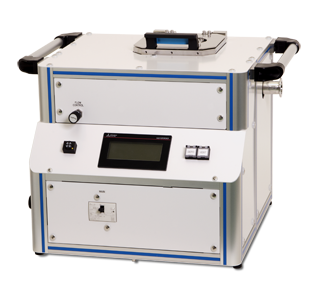
The SAL 1000 is a compact, user-friendly laboratory atomic layer deposition system engineered for precise step coverage and uniform atomic-layer coating—with excellent uniformity (±3% within Φ100 mm), pin-hole-free deposition, and intuitive operation for R&D applications.
Atomic Layer Deposition (ALD) is a thin-film deposition technique that builds layers one atomic layer at a time through controlled surface chemistry, enabling exceptional uniformity, step coverage, and conformality even on complex 3D geometries. The SAL 1000 brings laboratory-scale ALD capability to research institutions and development labs, providing an affordable entry point for thin-film characterization and process development.
The system is engineered for ease of use, compact footprint, and portability—making it ideal for exploratory ALD research without the complexity or cost of larger production systems. High-quality deposition uniformity (≦±3% across a Φ100 mm area) combined with simple manual operation via front-panel controls ensures that researchers can focus on material development rather than equipment management.
Key Features
- Exceptional uniformity: Deposition distribution ≦±3% within Φ100 mm diameter area
- Pin-hole-free atomic-layer coating through controlled precursor chemistry and reaction timing
- Superior step coverage for uniform deposition on uneven surfaces and 3D features
- Maximum temperature control up to 350°C for diverse material deposition
- Two independent gas lines for precursor supply and purge control
- Easy sample loading: Hinged top hatch with quick-access substrate holder
- Intuitive front-panel operation: Deposition and vent control buttons with anti-misoperation guards
- Real-time monitoring display showing pressure trends, cycle count, gas flow, and heater temperature
- Optional substrate rotation function for advanced process experimentation
- Portable design with carry handle — 50 kg total weight, easily relocated between lab spaces
- Compact footprint: W450 × D450 × H410 mm, fits into limited laboratory space
Specifications
| Parameter | Specification |
|---|---|
| System Type | Thermal ALD (Atomic Layer Deposition) |
| Precursor Lines | 2 independent lines |
| Deposition Uniformity | ≦ ±3% within Φ100 mm area |
| Maximum Temperature | 350°C |
| Substrate Size (Standard) | Up to 4-inch (100 mm) diameter wafer |
| Outer Dimensions (Main Unit) | W450 × D450 × H410 mm |
| Weight | 50 kg |
| Control Interface | Front-panel buttons + compact LCD display |
| Optional Features | Substrate rotation function for varied process experiments |
Design Advantages
- User-Friendly Operation: Minimal configuration needed to deposit a single film type; ideal for newcomers to ALD
- High Deposition Quality: Pinhole-free, uniform layers with superior step coverage on structured and 3D samples
- Easy Software: Small, intuitive display design shows all critical parameters (pressure, cycle count, gas flow, temperature) at a glance
- Portability: Carry handle and compact size enable relocation between lab spaces without complex reinstallation
- Simple Maintenance: Straightforward design with accessible precursor delivery and purge systems
Typical Applications
- Thin-film material research and characterization
- Precursor screening and film property development
- Conformal coating of complex microstructures and 3D features
- Process parameter optimization for ALD techniques
- University and research-institute exploratory ALD work
- Evaluation of gate dielectrics, high-k materials, and barrier films
- Depositions of oxides, nitrides, and metal films
Sample Materials & Depositions
The SAL 1000 supports a range of ALD processes, including (but not limited to):
- Oxides: Al₂O₃, TiO₂, ZrO₂, HfO₂, SiO₂
- Nitrides: AlN, TiN, and related compounds
- Metals: Selective metal deposition through ALD chemistry
- Complex Films: Multi-layer stacks and laminar structures
Key Benefits for R&D
- Afford entry point for ALD research without prohibitive capital cost
- Demo system available for deposition testing before purchase
- Minimal training required — simple, intuitive operation
- Fast iteration on precursor chemistry and process parameters
- Excellent uniformity ensures reproducible, comparable results across experiments