
Dimensional Stability vs Temperature
Measure expansion, CTE, and thermal deformation with confidence
Dilatometry is a core method for understanding how materials expand and contract under controlled thermal conditions. It is widely used for metals, ceramics, glass, carbon-based materials, and other engineering solids where dimensional stability affects performance, fit, and lifetime.
Beyond CTE determination, dilatometry can reveal softening, sintering-related behavior, and structural changes that appear as slope shifts or expansion anomalies. Reliable results depend on sample geometry, contact conditions, calibration, and program design. In practice, DIL is especially valuable when translating laboratory characterization into component-level expectations for thermal cycling, joining, and multi-material assemblies.
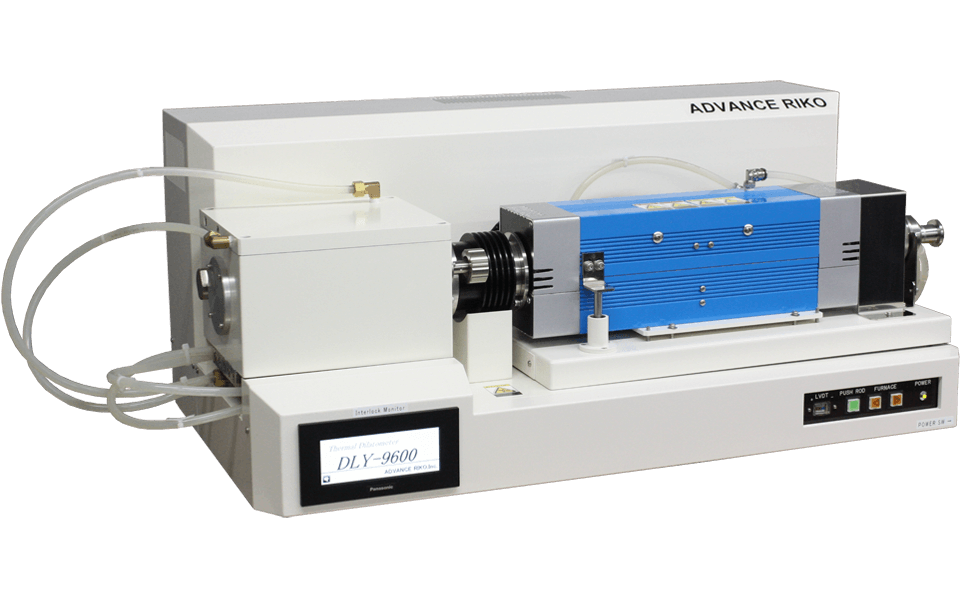
DL-9000 / DLY-9000 series
Push-rod thermodilatometer for thermal expansion measurements of metals, ceramics, glass and carbon from −170 to 1700 °C.