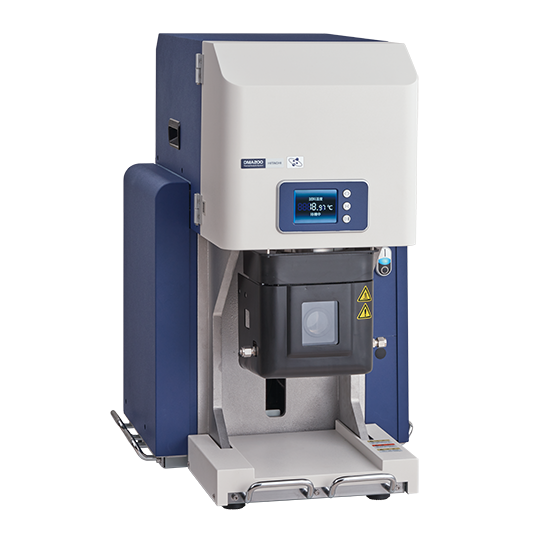
Viscoelastic Performance Mapping
Reveal stiffness and damping across real operating conditions
DMA is used when static properties are not enough to explain real material performance. By applying oscillatory deformation, the method separates elastic and viscous responses, enabling sensitive detection of transitions, relaxation behavior, and structure-property relationships.
It is particularly powerful for polymers, composites, adhesives, and soft materials where modulus, damping, and frequency dependence influence product function. Method setup choices such as deformation mode, strain level, frequency, and clamp configuration strongly affect data quality. With a well-designed DMA workflow, teams can compare formulations, validate processing changes, and map functional windows for temperature-dependent mechanical use.