

Overview
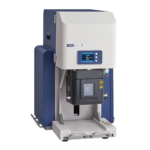
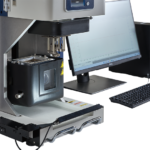
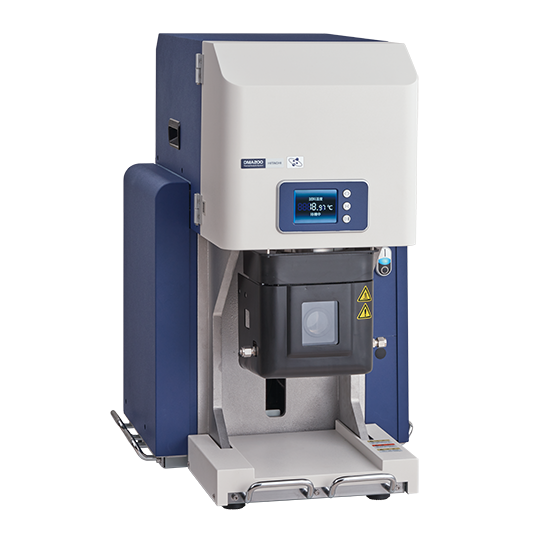
The NEXTA DMA200 from Hitachi High-Tech measures the viscoelastic properties of materials with high sensitivity across a wide force and modulus range, making it a reliable tool for both applied research and materials development.
Dynamic Mechanical Analysis (DMA) measures how a material responds to an oscillating force as a function of temperature and frequency, characterizing viscoelastic properties such as storage modulus, loss modulus, and damping factor (tan δ). The technique is particularly sensitive for detecting glass transition, assessing material stiffness, and understanding the influence of frequency on mechanical behavior — properties that are often difficult to resolve by other thermal methods.
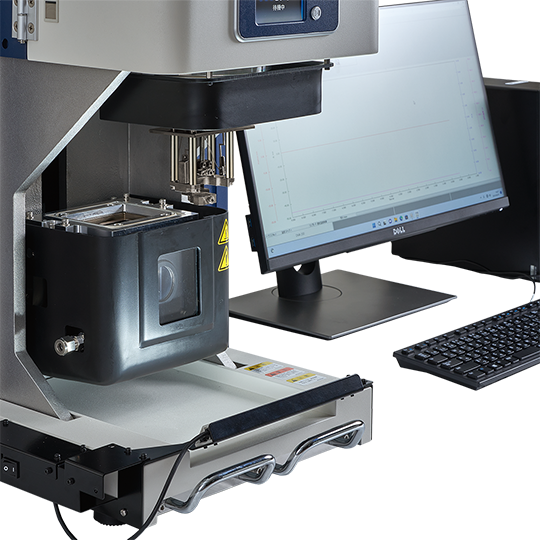
The NEXTA DMA200 combines an exceptionally wide measurement range with rapid electronic response, making it equally capable of characterizing stiff materials such as carbon fiber composites and soft or flexible samples. The integrated Real View® camera system allows real-time observation of the sample during measurement, helping to identify unexpected behaviors such as sample deformation, cracking, or color shifts, and enabling verification of data reliability after the run has completed.
Key Features
- 20N maximum force range for reliable analysis of stiff and high-performance materials including carbon fiber composites
- Wide applied force range with 5×10⁻⁶N resolution for detection of even the smallest transitions and subtle material changes
- Broad modulus measurement range of 103 to 1013.5 Pa covering both soft and rigid samples in a single instrument
- Multiple deformation modes — tension, single/dual cantilever, 3-point bending, shear, film-shear, and compression
- Three cooling options: air, liquid nitrogen (LN2, down to −150°C), or electrical gas cooling (down to −100°C) — LN2 consumption reduced by up to 30%
- Real View® camera for real-time visual sample observation, synchronized with mechanical data by timestamp
- Lissajous monitor function for in-measurement and post-measurement validation of result quality
- Spring-mounted driving shaft — no compressed air required
- Guidance Mode software for step-by-step measurement support; master curve (TTS) and activation energy analysis included as standard
- Compliant with ISO 6721-11, ASTM D7028-07, IPC 2.4.24.2, JIS K7095, and additional ISO, ASTM, DIN, and JIS standards built into the software
Typical Use Cases
- Glass transition temperature (Tg) determination in polymers and composites
- Stiffness and damping characterization of high-performance structural materials
- Frequency-dependent viscoelastic behavior analysis for product design and formulation
- Cure monitoring and gelation studies in thermoset resins and adhesives
- Low-temperature mechanical behavior assessment of elastomers and flexible films
- Failure analysis and comparative benchmarking in advanced materials development
Specifications
| Parameter | NEXTA DMA200 |
|---|---|
| Deformation Mode Options | Tension, single/dual cantilever, 3-point bending, shear, film-shear, compression |
| Maximum Force | 20 N |
| Modulus Range | 10³ to 10¹³.⁵ Pa |
| Frequency | Sinusoidal wave: 0.01 to 200 Hz (max 20 frequencies); Synthesis wave mode: 5 frequencies |
| Temperature Range | LN2: -150 to 600°C; Electrical gas cooling: -100 to 600°C; Air: RT to 600°C |
| Sample Observation | Real View® ready |
| Driving Shaft | Spring mounted (no compressed air required) |
| Sensor | LVDT |
| Dimensions | 420(W) × 630(D) × 725(H) mm |
* Deformation modes “Bending”, “Shear”, “Film Shear”, “Compression”, and “3-Point Bending” are optional accessories.